Travel Guide
Rohtas Fort: History, Gates and a Day Trip from Lahore
Sher Shah Suri's 16th-century fort near Jhelum, about 200 km from Lahore: its history, its 12 gates and how to see it in a day.
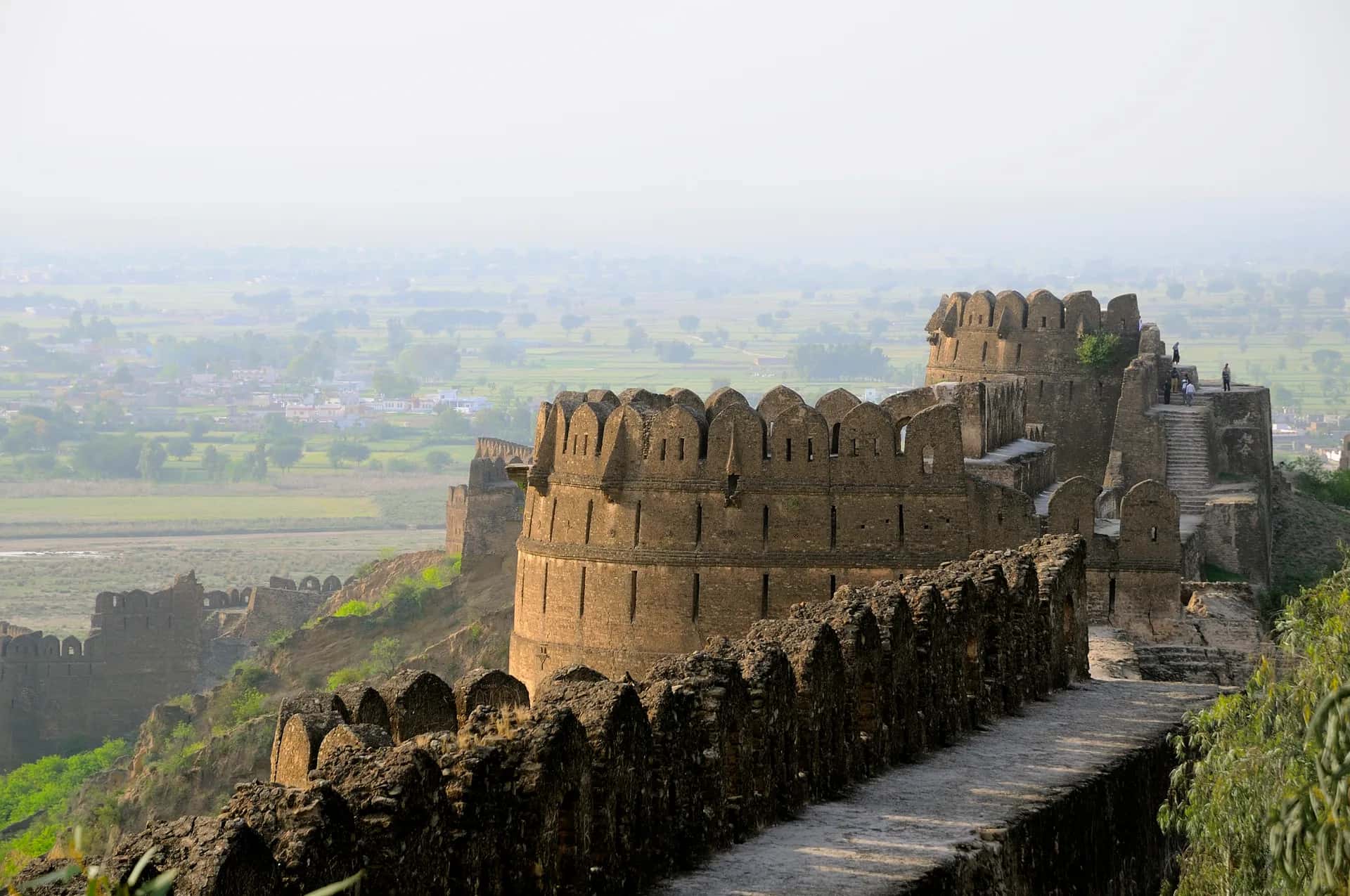
Rohtas Fort is a 16th-century fortress near Jhelum in Punjab, built for the Pashtun ruler Sher Shah Suri. Its walls run for 4 km over a low hill above the Kahan river, broken by 12 gates and 68 bastions, and much of it still stands.
Locally it is Qila Rohtas. It is a UNESCO World Heritage Site about four hours from Lahore, yet on a weekday you may share it only with the village that lives inside its walls.
- Built
- From 1541, for Sher Shah Suri
- Walls
- About 4 km, 68 bastions, 12 gates
- UNESCO
- World Heritage Site since 1997
- From Lahore
- About 200 km, 3.5 to 4 hours
On this page
Where is Qila Rohtas in Jhelum?
The fort lies about 8 km south of the Grand Trunk Road, roughly 16 km north-west of Jhelum city and close to the town of Dina. The last stretch is the Rohtas road, which leaves the GT Road near Dina and crosses the Kahan, a seasonal river that is dry for much of the year.
From Lahore it is about 200 km, and from Islamabad about 110 km. Getting there is still a small adventure: the last few kilometres are narrow village road, and the walls appear all at once as you come round the hill.
Rohtas Fort history
Sher Shah Suri defeated the Mughal emperor Humayun at Chausa in 1539 and again at Kannauj in 1540, and Humayun fled to Persia. To stop Humayun coming back from Persia, and to hold down the Gakhar tribes of the Potohar region who were loyal to the Mughal crown, Sher Shah ordered a great fort on the road to Kabul. Work began in 1541 under Todar Mal, who later served Akbar as finance minister. Sher Shah died in 1545, before it was finished, and his successors completed it in the late 1540s.
The fort did not stay with the Suris for long. In 1555, when Humayun returned, the governor of Rohtas deserted and the fort passed to the Mughals without a fight. It was never popular with them because of its military character. Emperor Akbar stayed here for a single night.
Emperor Jahangir rested here for one night on his way to Kashmir and wrote that the fort "was founded in a cleft, and the strength of it cannot be imagined". He came back years later, when his general Mahabat Khan had taken him prisoner and was forcing him toward Kabul. His wife Nur Jahan raised troops from Lahore and made Mahabat Khan release him. Jahangir then came on to Rohtas and held his court here for a while, before going on to Kashmir and finally back toward Lahore, where he was buried.
The Mughals rarely stayed at Rohtas after that. They had made allies of the Gakhars, so they no longer needed a large garrison to hold the area. In about 1767 Sikh forces under Charat Singh and Gujjar Singh Bhangi besieged the fort for months, and it was finally given up from within when a gate was opened. The British took over the Punjab in 1849. In 1997 UNESCO listed Rohtas as a World Heritage Site and an exceptional example of Muslim military architecture in central and South Asia.
| Year | What happened |
|---|---|
| 1539 | Sher Shah Suri defeats Humayun at Chausa |
| 1541 | Building starts under Todar Mal |
| 1545 | Sher Shah dies; his successors finish the fort |
| 1555 | The governor deserts and the fort passes to Humayun |
| Mughal period | Short stays by Akbar and Jahangir |
| About 1767 | Sikh siege; the fort is handed over from inside |
| 1849 | British rule over the Punjab |
| 1997 | UNESCO World Heritage Site |
How big is the fort?
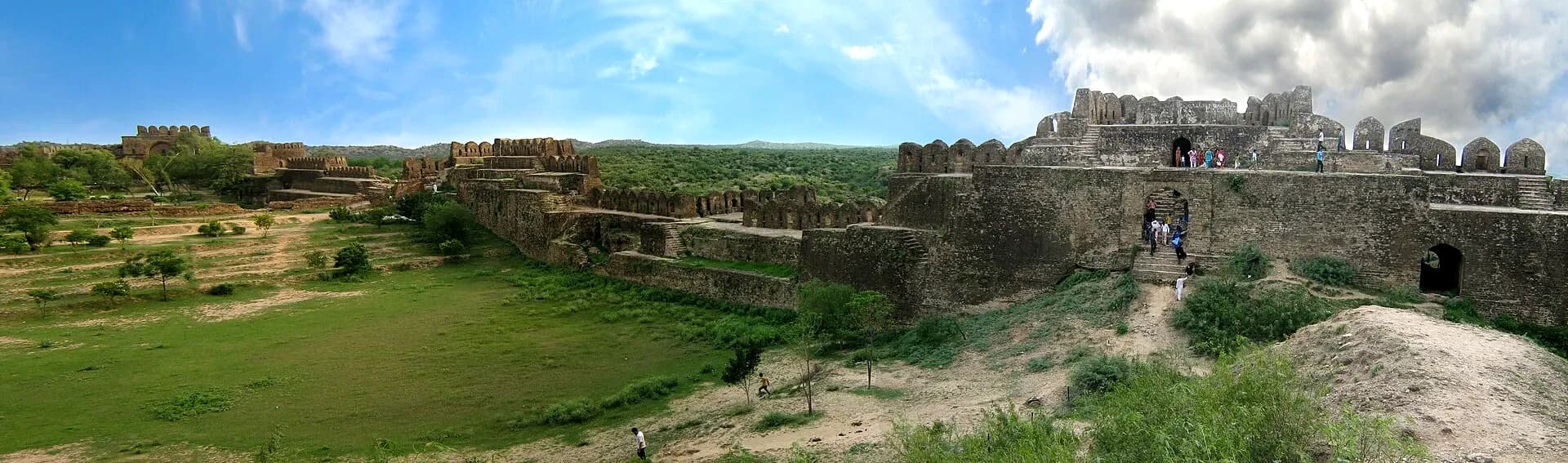
The fort covers about 70 hectares, close to 170 acres. Its outer wall is about 4 km long, strengthened with 68 bastions and pierced by 12 gates. Rather than a neat square, it makes a rough triangle that follows the edge of the hill it stands on.
In the north-west corner, a wall 533 m long cuts off an inner fort, the Andar Kot. This was the citadel for the nobles and was guarded more heavily than the rest, and many of the best surviving buildings are inside it. The whole fort could hold a garrison of up to 30,000 men.
With its position, its huge walls, its trap gate and three stepwells for water, Rohtas was built to sit out a long siege. It was besieged, in the 1760s, but it was never taken by storm, which is one reason so much of it has survived. More than a third of the area inside the walls is now Rohtas village, with houses, shops and lanes of its own.
Gates of Rohtas Fort
Rohtas has 12 gates, the count used by the district government and in the UNESCO description, though some lists, Wikipedia among them, give 14.
Sohail Gate
the main and finest gate, with the Sher Shah Suri museum inside.
Kabuli Gate
faces toward Kabul, beside the Shahi Masjid.
Shishi Gate
named for the blue glazed tiles on its face.
Langar Khani Gate
opens into the inner fort but is really a trap, in direct line of fire from the walls around it.
Talaqi Gate
its name means divorce, and it was thought a bad omen.
Khwas Khani Gate
the old entrance from the Grand Trunk Road.
Shah Chandwali Gate
the only gate rebuilt in modern times.
Mori or Kashmiri Gate
faces toward Kashmir.
Gatali, Tulla Mori, Pipalwala and Sar gates
smaller gates in the outer wall. The Sar Gate is beside the Sar stepwell, and the bastion near Gatali Gate is one of the damaged sections.
Kabuli Gate
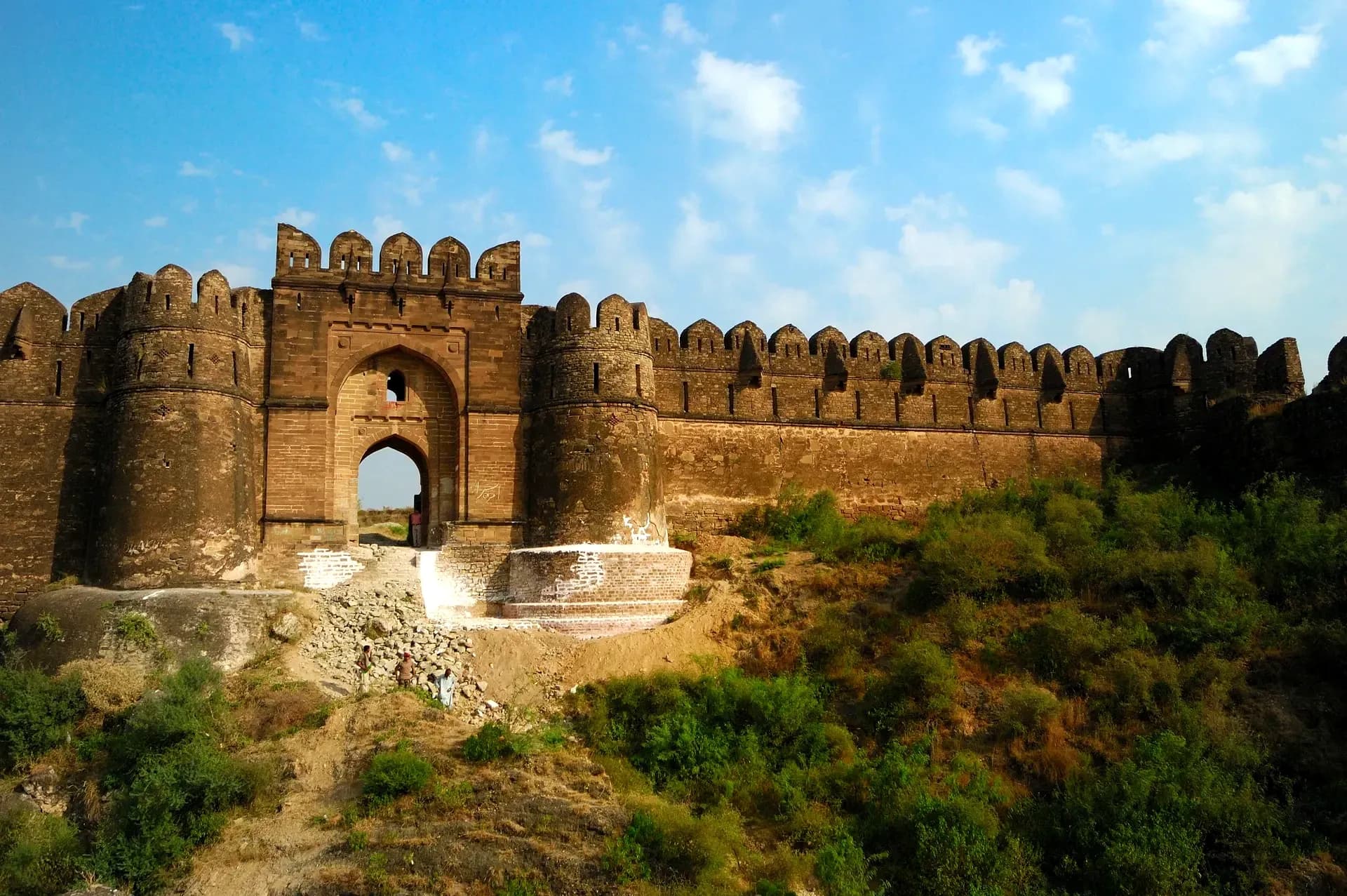
Kabuli Gate faces toward Kabul, and it is the one most visitors photograph, because the Shahi Masjid sits just inside it. The Himalayan Wildlife Foundation set up a small visitor centre here, open about 8 am to 5 pm.
What to see inside the fort
The fort is too big to see everything in a few hours, so plan a loop. Start at Sohail Gate and its museum, walk through the village to the Shahi Masjid and Kabuli Gate, go up into the inner fort for the Haveli Man Singh and the Langar Khani gate, and finish on the walls in the late afternoon. Allow three to four hours on foot.
Shahi Masjid
The Royal Mosque, just inside Kabuli Gate, is small, a single prayer hall, yet it is the most decorated of Sher Shah's original buildings. Take your shoes off before you step inside.
The stepwells
Rohtas has three baolis, stepped wells cut down to water so the garrison could survive a siege: the central baoli, with about 148 steps, the royal baoli with about 60, and the Sar baoli near Sar Gate. The steps are worn smooth and steep, so hold small children by the hand.
Haveli Man Singh and Rani Mahal
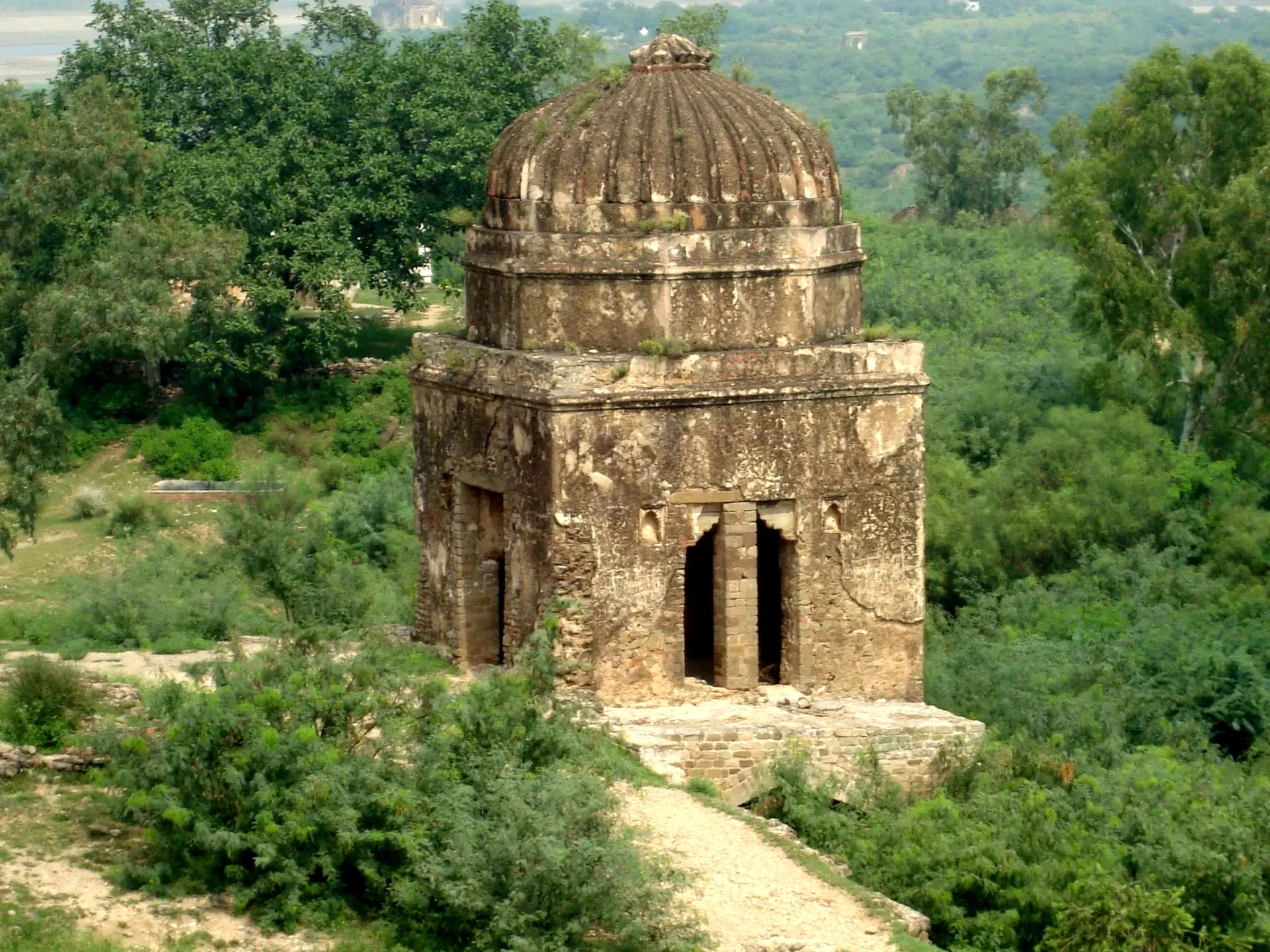
There are no palaces in the fort except the Haveli of Raja Man Singh, Akbar's general, built on the highest point of the citadel. It is a later Mughal-era addition, not part of Sher Shah's plan, and from it you look out over the walls and the Kahan river. Close by is the Rani Mahal; only one of its four rooms survives.
Langar Khani Gate and Phansi Ghat
Stand inside Langar Khani Gate and you will see why it was a trap: anyone forcing it came out into a closed space under the guns of the inner walls. Nearby is Phansi Ghat, the bastion that local guides point out as the old place of execution.
The walls and bastions
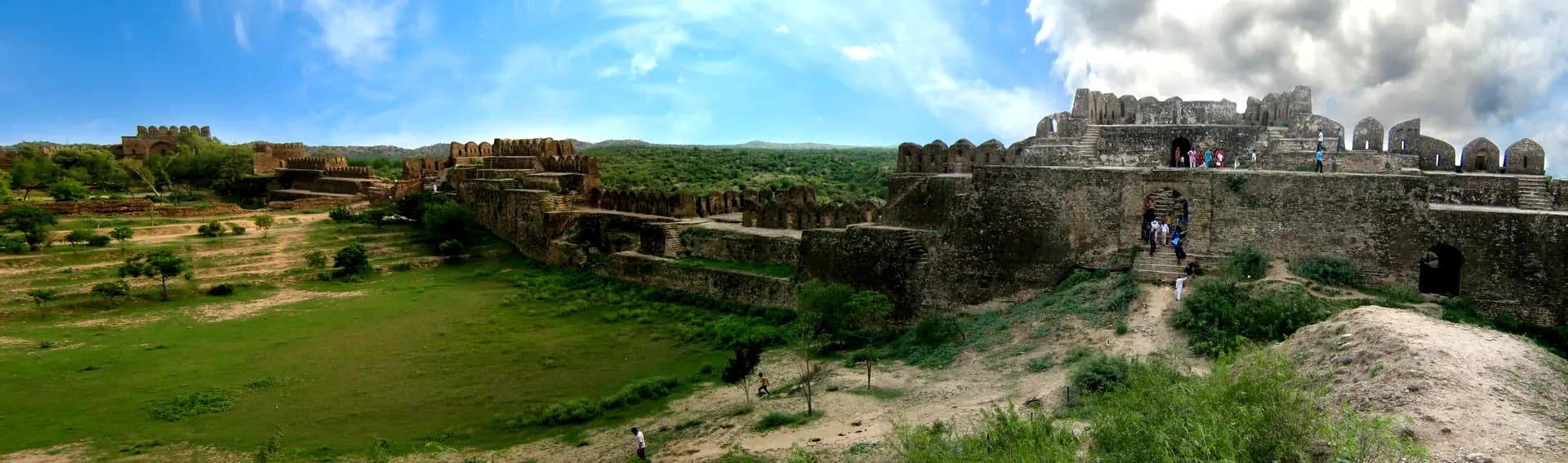
From the higher bastions you get long views over the countryside. Some sections are damaged: the inner face of Talaqi Gate collapsed in 2005, and the Gatali bastion has also suffered, so keep children back from the edges.
Rohtas Fort day trip from Lahore
Rohtas Fort from Lahore is a long but easy day. The route is the GT Road (N-5) through Gujranwala, Gujrat, Kharian and Jhelum to Dina, then the Rohtas road to the fort: about 200 km, 3.5 to 4 hours each way, more if you hit Gujranwala at rush hour. Plan on 10 to 12 hours door to door.
Without a car, take a train or coach to Jhelum, or a coach to Dina, then a rickshaw to the fort. Dina is about 10 km away and Jhelum about 16 to 18 km.
We do not run a fixed group tour to Rohtas. We arrange it as a private day trip from Lahore with your own car and driver; send us your date through the contact page, or see our other tours.
| Time | Plan |
|---|---|
| 6:30 am | Leave Lahore on the GT Road |
| 8:30 am | Breakfast stop near Gujrat or Kharian |
| 10:30 am | Reach the fort; Sohail Gate and the museum |
| 11 am to 2 pm | Village, Shahi Masjid, Kabuli Gate, stepwells, inner fort |
| 2 pm | Lunch in Dina or Jhelum |
| 3 pm | Drive back to Lahore |
| 7 to 8 pm | Back in Lahore, depending on traffic |
Rohtas Fort tickets and timings
The ticket is PKR 20 for Pakistanis and PKR 500 for foreigners, who may be asked for a passport. A local guide costs about PKR 1,000 for an hour, and a golf cart with a driver about PKR 2,000 an hour, which saves a long walk in the heat. Prices change from time to time, so carry some extra cash. The fort is open daily from about 8 am to 5 pm. The museum at Sohail Gate has been closed for repairs at times, so do not plan the day around it.
Best time to visit and tips for the heat
October to March is the best time to visit. Winter days are mild and clear, and a full day on foot is pleasant. From May to August the temperature goes over 40 °C, and there is almost no shade on the walls or in the open ground.
- In summer, arrive by 8 am and leave before midday.
- Wear strong shoes; the paths are rough stone and the stepwells are steep.
- Carry water and a hat. Shops in the village are small and not always open.
- Weekdays are quieter than Sundays and public holidays.
- Local guides wait at the gates, at about PKR 1,000 an hour; agree the price and the time first.
Nearby: Tilla Jogian and Khewra
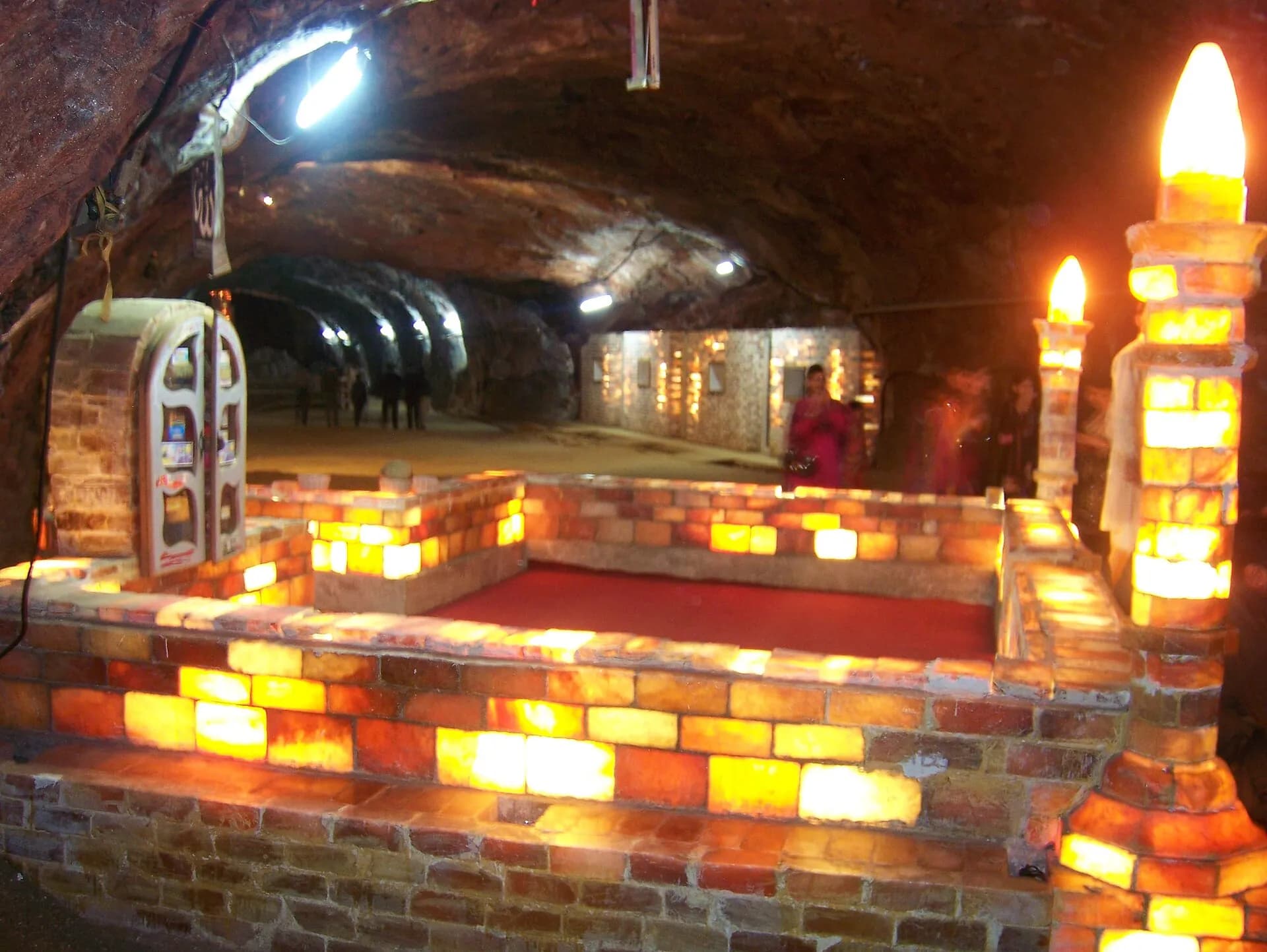
With a car and an early start you can add one more stop. Tilla Jogian, the hilltop with the ruins of the old Jogi monastery, is about 25 km away. Khewra Salt Mine is a longer drive into the Salt Range, but people often pair it with Rohtas. Katas Raj temples and Mangla Dam are also within reach. Pick one; trying to see all of them in a day means seeing them from the car.
Frequently asked questions
Who built Rohtas Fort, and why?
Sher Shah Suri, the Pashtun ruler who drove the Mughal emperor Humayun out of India. He built it to block Humayun's return from Persia and to control the Gakhar tribes of the Potohar region.
When was Rohtas Fort built?
Building began in 1541 under Todar Mal. Sher Shah died in 1545 and his successors finished the fort in the late 1540s, so it is more than 480 years old.
How far is Rohtas Fort from Lahore, Islamabad and Jhelum?
About 200 km from Lahore (3.5 to 4 hours on the GT Road), about 110 km from Islamabad (2 to 2.5 hours) and 16 to 18 km from Jhelum city.
Can you visit Rohtas Fort as a day trip from Lahore?
Yes. Leave early, spend three to four hours at the fort and you are back in Lahore in the evening, 10 to 12 hours in all. We arrange private day trips with a car and driver on request.
How many gates does Rohtas Fort have?
Twelve. Sohail Gate is the main and finest one; others include Kabuli, Shishi, Langar Khani, Talaqi and Khwas Khani.
Show 3 more questions
Is Rohtas Fort a UNESCO World Heritage Site?
Yes, since 1997, as an exceptional example of Muslim military architecture in central and South Asia.
Was Rohtas Fort ever captured?
It was never taken by storm. It passed to Humayun in 1555 when its governor deserted, and Sikh forces besieged it in about 1767 until it was handed over from inside.
What is the Rohtas Fort ticket price?
PKR 20 for Pakistanis and PKR 500 for foreigners. A guide is about PKR 1,000 an hour and a golf cart about PKR 2,000 an hour.